


If you’ve been paying attention to tech headlines, you’ve probably noticed the cycle surrounding Augmented Reality (AR) headlines. One month, AR is trumpeted as the feature of computing, and next, it’s labeled a failure because high-priced headsets didn’t sell hundreds of thousands in the first week. However, for those of us in the 3D industry, AR is thriving as crucual part of industrial and retail infrastructure. Let’s take a look at the data behind AR in 2025.
The Misunderstood Narrative of Failure
The “AR is dead” narrative is fueled by the stagnation of high-end consumer headsets, but it ignores the technology's massive scale elsewhere. While active mobile AR users worldwide are expected to exceed 2 billion in 2025, the public perception of failure comes from the fact that we no longer see AR as a standalone event or special experience you seek out. Instead, it has become a background utility. It’s now an invisible layer of modern logistics that solves real-world business problems.
In 2024, it’s estimated that retail returns exceeded $850 billion, making up about 17% of global retail sales. Let that huge number sink in for a moment, now think about the hidden costs in reverse logistics, repackaging, restocking, disposal, and the burgeoning carbon footprint. So what was done to try to alleviate this return tsunami?

Using AR as part of the shopping journey. In 2025, brands using AR reported up to a 35% drop in product returns, helping them save millions. They achieved this because AR helps reduce the uncertainty consumers face when shopping online. When shopping for a new sofa or clothes, consumers can use a smartphone to see how it might look in their living room on them via AR, checking its fit and style before committing.
Mobile Dominance and Wearable Pivot
Currently, most AR interactions run on smartphones, but that’s beginning to change. Increasingly, the tech industry is turning to smart glasses to make AR more accessible and practical. In fact, shipments of smart glasses worldwide grew by 110% in the first half of 2025. Products like the Meta Ray-Bans have seen their sales more than triple this year.

Unlike the bulky AR headsets, smart glasses are lightweight and easy to wear. With features like navigation, live translation, and hands-free help built right into the glasses, AR is becoming something you can use without discomfort or major inconvenience. Analysts are expecting sales to quadruple in 2026 as this technology continues to mature.
Solving the Content Bottleneck
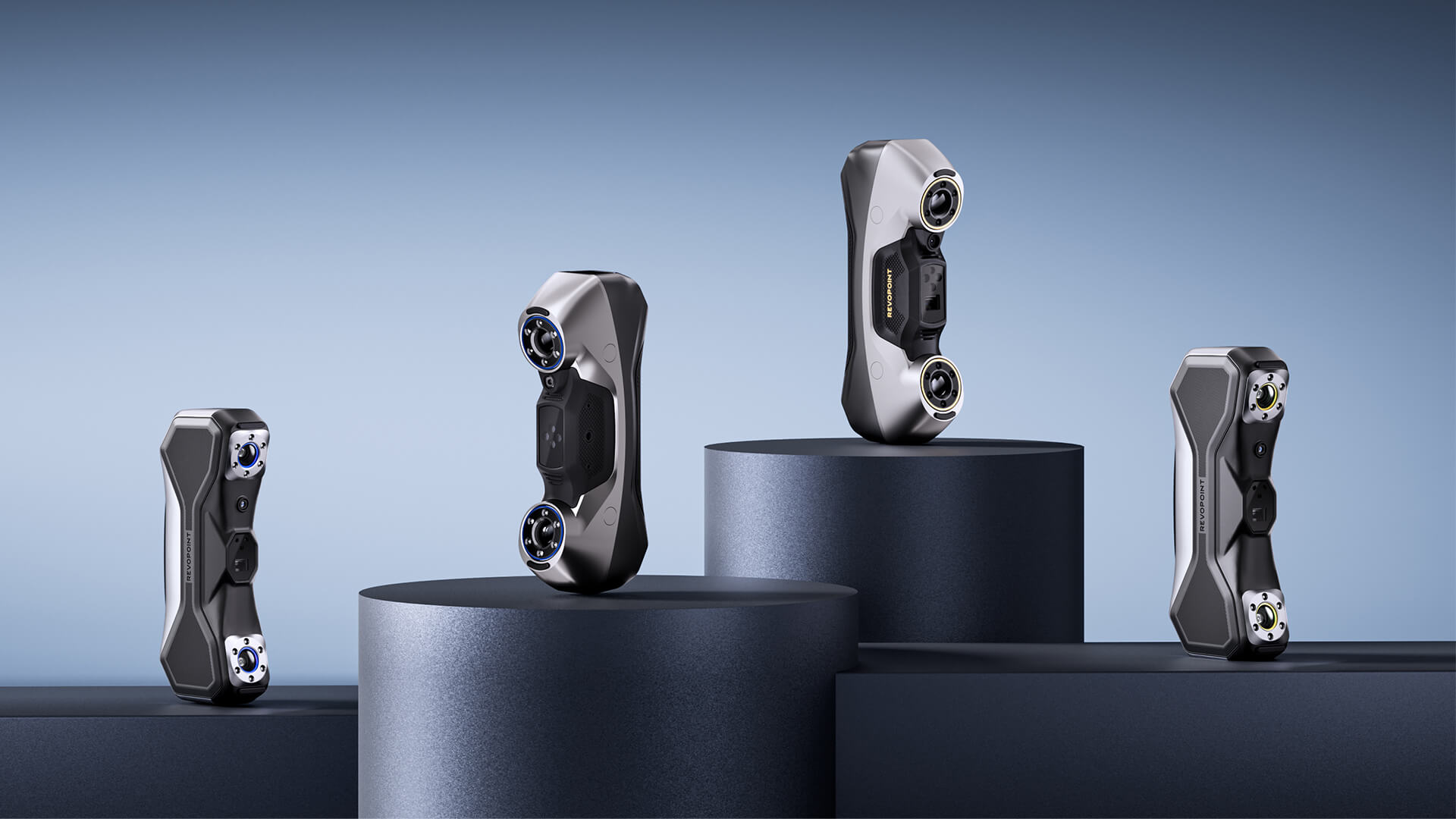
Part of the accelerant fueling increasing AR glass sales is that content creation for AR is no longer a massive obstacle. In the past, creating these models took weeks of manual labor or access to expensive 3D scanning systems. Now, affordable high-accuracy 3D scanners like the Revopoint MetroX Pro or MIRACO Plus have made content creation much faster and more accessible.

The AR Market in 2026
The AR industry is currently emerging from a period of strategic correction. In 2024, the hardware market experienced delays and major shifts as Apple reduced Vision Pro production and Meta canceled its high-end headset designed to compete with Vision Pro.
The numbers for 2025 show a recovery, with the AR market expected to reach $120 billion by year-end. This growth is supported by shipments of AR devices and smart glasses, which are projected to grow by nearly 40% this year. Every day, over 500 million people interact with AR filters and lenses on social media platforms.
Analysts forecast a strong rebound in 2026, with hardware shipments projected to grow by 87 percent, driven by the arrival of consumer‑grade AR glasses and standardized ecosystems such as Google’s Android XR platform, which finally give developers the software foundation needed for mass‑market adoption.
Why AR Scaling Depends on 3D Scanning
The next two years will be defined by how quickly physical objects can be converted into high‑quality digital assets. Platforms like Android XR provide the software foundation for mass‑market AR, but they can’t function without accurate 3D content. That’s why demand for professional‑grade 3D scanning is rising across retail, manufacturing, and product design. And as we move toward 2026, the real question isn’t whether AR works. It’s whether organizations have the 3D content pipeline to feed it.
Ensure your organization is prepared for the upcoming hardware cycle by adopting Revopoint’s professional 3D scanners, designed to produce highly accurate, production‑ready 3D models.


Hinterlasse einen Kommentar
Diese Website ist durch hCaptcha geschützt und es gelten die allgemeinen Geschäftsbedingungen und Datenschutzbestimmungen von hCaptcha.